 Indra G. Prasetya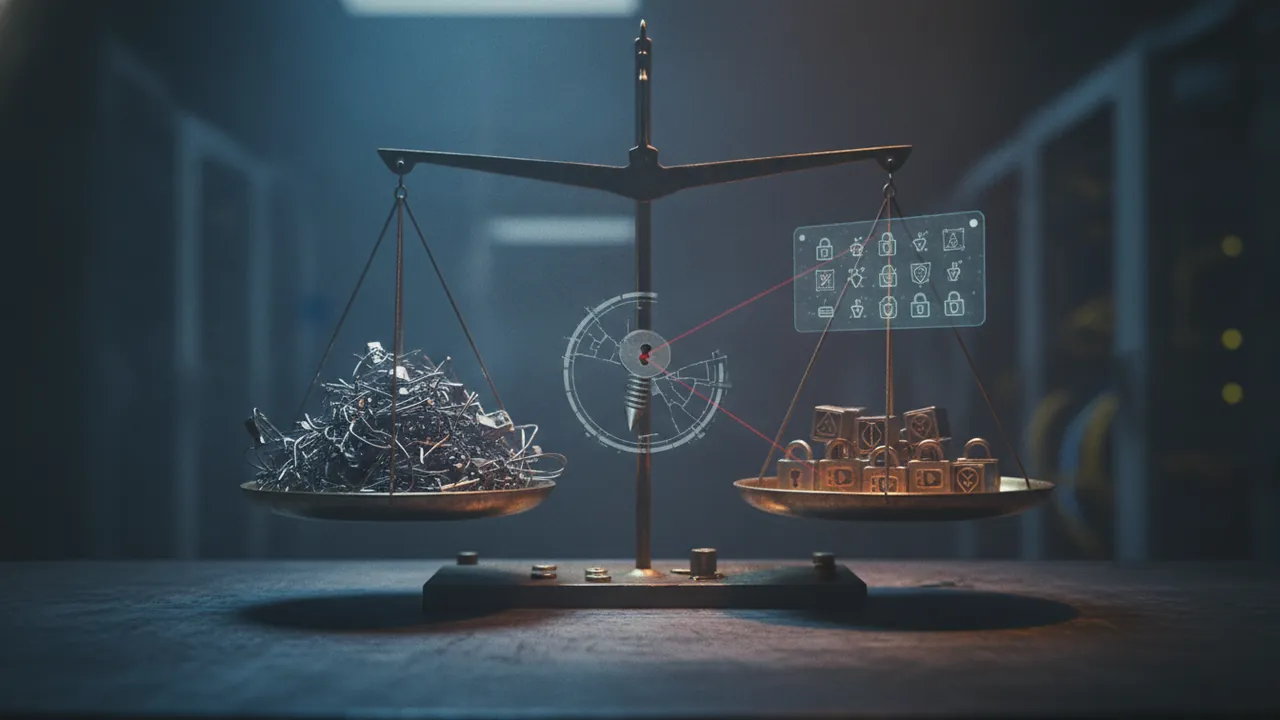
Most of the pages ranking for "Trivy vs Grype" compare them on the wrong axis. They line the two tools up on a single-image speed benchmark, declare Grype 30 to 40 percent faster, and call that a decision, when it is not. These are not two builds of the same product. They do two different jobs, and swapping one in for the other is exactly how you end up with a gap in your pipeline that nobody notices until an auditor does.
TL;DR: Trivy is the all-in-one scanner covering images, filesystems, IaC, secrets, and live clusters. Grype is a CVE matcher that sits on top of a Syft SBOM. Pick on the job you need filled, not on the half-second warm-cache gap, then upgrade Grype to v0.88.0 or newer because schema v5 went end of life on March 6, 2026, and pin Trivy to v0.69.3 after the March 19 release compromise.
The benchmark posts skip this: in the first quarter of 2026, both tools had a defining incident. One went blind, the other got backdoored. Neither shows up in a feature matrix, and both change how you should be running these scanners right now.
| Criteria | Trivy (Aqua Security) | Grype (Anchore) |
|---|---|---|
| Primary job | All-in-one DevSecOps scanner | Matching packages against known CVEs |
| Targets | Images, filesystems, git repos, VM images, live Kubernetes | Packages, usually from a Syft SBOM |
| IaC misconfiguration | Yes | No |
| Secret scanning | Yes | No |
| License scanning | Yes | No |
| SBOM workflow | One binary does the whole scan | Syft builds the bill of materials, Grype scores it |
| Warm-cache matcher speed | About 1.2 seconds per scan | About 0.7 seconds, 30 to 40 percent faster |
| Cold scan, 500 MB image | 8 to 9 seconds | 8 to 9 seconds |
| Q1 2026 incident | Poisoned releases, March 19 to 23 | DB schema v5 end of life, March 6 |
| Pin to | v0.69.3, plus pinned trivy-action and setup-trivy | v0.88.0 or newer on schema v6 |
They are not competitors, they are different jobs
Trivy, from Aqua Security, is the all-in-one DevSecOps scanner. One binary covers container images, filesystems, git repos, VM images, and live Kubernetes clusters, plus IaC misconfiguration checks, secret scanning, and license scanning. You point it at almost anything and it tells you what's wrong.
Grype, from Anchore, does one thing. It matches packages against known CVEs. No IaC, no secrets, no license compliance. It is the vulnerability-matching half of a pipeline, and its other half is Syft, Anchore's SBOM generator. Syft builds the bill of materials, Grype scores it.
So the real question was never "which is faster." It's "what job am I filling." If you want a single tool for CVEs and misconfig and secrets and cluster posture, that's Trivy. If you're building an SBOM-first supply chain and want a clean, auditable matcher on top of a generated bill of materials, that's Syft plus Grype. Choosing Grype to cover Trivy's IaC scanning, or Trivy to replace a dedicated SBOM flow, means quietly dropping capability you may be assuming you have.
Here is how the two shapes actually sit in a build:
The speed gap is real and mostly a distraction
Multiple 2026 comparisons do put Grype ahead: roughly 30 to 40 percent faster on pure vulnerability matching, around 0.7 seconds versus 1.2 seconds per scan with a warm cache. That much is real, but on a cold first scan of a 500 MB image, both land near 8 to 9 seconds, and in a pipeline that already burns minutes building and pushing layers, half a second of matcher time decides nothing.
I've never once had a platform team come to me and say the image scan was the bottleneck in their build. The bottleneck is the base image download, the layer export, the registry round-trip. Picking your security scanner on a 0.5s delta is optimizing the wrong number. If speed genuinely matters to you, it's usually because you're running the scan hundreds of times an hour, and at that point cache behavior and DB freshness matter far more than a warm-cache micro-benchmark.
Grype quietly went blind on March 6
Here's the incident nobody benchmarks. Per Anchore's community announcement, Grype DB schema v5 reached end of life on March 6, 2026, and publishing of v5 updates was disabled around March 9. Any Grype older than v0.88.0 stopped receiving new vulnerability data on that date.
The failure mode is nasty: the old Grype doesn't error. It keeps running, keeps exiting zero, keeps printing findings against a frozen database. A pinned-and-forgotten Grype baked into a CI image three quarters ago is now a scanner that cannot see a single CVE disclosed after early March, and your build stays green the whole time. That's the worst kind of security control: one that reports success while doing nothing.
The upgrade is not optional. Grype on schema v6 also ships something genuinely useful, which softens the pill.
What v6 actually buys you: EPSS and KEV in the database
Per Anchore's write-up on the v5 to v6 schema change, DB v6 embeds the CISA KEV catalog and EPSS scores directly in the database. So the output now carries an EPSS score like 0.97112 at percentile: 0.9989 sitting next to the CVSS severity. That's the difference between "this is rated High" and "this has a 97 percent modeled probability of exploitation and is already in the known-exploited catalog." One of those you can triage by. The other is a label.
The v6 archive also dropped from 210 MB to 65 MB compressed, a 69 percent cut. If you run air-gapped scanners or bandwidth-constrained runners that pull the DB on every job, that's a real operational win, not a footnote.
The scanner that finds compromised software got compromised
Now the Trivy side, and it's a darker story. Per Aqua Security's own incident write-up in GitHub discussion #10425, on March 19, 2026 a threat actor used a compromised credential to publish malicious versions of Trivy. The bad v0.69.4 went out across GHCR, ECR Public, Docker Hub, deb, rpm, and get.trivy.dev, and the latest tag pointed at it for roughly three hours, 18:22 to about 21:42 UTC. The trivy-action GitHub Action was poisoned for about twelve hours, setup-trivy for about four. Malicious v0.69.5 and v0.69.6 followed on Docker Hub on March 22 to 23.
The detail that should bother you most is the cause. Aqua notes this followed incomplete containment of an earlier March 1 incident: they had rotated secrets, but "the process wasn't atomic and attackers may have been privy to refreshed tokens." A partial rotation left a window, and the window got used. That is a textbook supply-chain lesson, and it landed on a supply-chain tool.
Aqua also paused updates to vuln-list, trivy-db, and trivy-java-db during the investigation, then restored them. Trivy's database documentation covers how that cache is pulled and refreshed, so if your pipeline pulled the DB inside that window, don't assume it caught up on its own; confirm it refreshed.
The honest limit: neither tool would have caught this
This is where I want to be blunt, because the marketing around image scanning encourages a dangerous assumption. Neither Trivy nor Grype would have flagged the poisoned Trivy binary. A backdoored release is not a package with a published CVE. Image scanning is disclosed-vulnerability detection, full stop. It tells you which known CVEs affect your packages. It does not prove the binary you pulled is the one the maintainer built.
Treating a scanner as build-provenance verification is the gap that Q1 2026 exposed. The tool you install to catch compromise is itself a dependency at your most sensitive control point, and if you pull it as latest, it's an unpinned one. The fix for compromised software was never the vulnerability scanner. It's signature and provenance verification, sitting alongside the scanner, doing the job the scanner was never built to do.
Running both scanners is a legitimate strategy in regulated shops: two independent matchers with different databases catch more than either alone. But be honest about the cost. After Q1 2026, keeping both toolchains current, both DBs fresh, both binaries pinned and verified, is real ongoing work. Two half-maintained scanners are worse than one you actually keep up.
What to fix this week
Pick by job first, then harden the runtime. Concrete steps, in the order they bite:
- Upgrade every Grype to at least v0.88.0 and confirm schema v6. Anything older went blind on March 6, 2026 and is scanning against a dead database while exiting zero. Grep your CI images for pinned Grype versions today.
- Add a DB-freshness gate. Fail the build if the vulnerability database is older than a threshold you set (a day or two for a matcher that ships daily). A frozen DB must never pass silently. This is the single check that would have caught the March 6 blind spot on its own.
- Pin Trivy to a known-good version. Aqua flags v0.69.3 as the safe immutable release around the incident. Pin
trivy-actionandsetup-trivyto safe tags too, not floating ones.latestat a security control point is a liability. - Verify the binary you install. Check the checksum or the Cosign signature on the Trivy you pull, in the same job that installs it. If you pulled anything in the March 19 to 23 window, re-verify against a clean release.
- Confirm your Trivy DB refreshed after the incident pause. Updates to
trivy-dband friends were suspended during the investigation. If you cached the DB then, force a refresh. - Pair scanning with provenance. Add signature and SBOM-attestation verification next to the scan. Q1 2026 proved the scanner is part of your attack surface, and no CVE matcher will ever tell you the tool itself was swapped.
Choose Trivy or Grype on the job you need covered. Then treat both as what they are: dependencies you pin, verify, and keep fresh, because the quarter just showed you what happens when you don't.
If you would rather hand the version pinning, the freshness gate, and the provenance checks to someone who has wired them into a build before, that's work I take on.
FAQ
Is Grype actually faster than Trivy? On warm-cache vulnerability matching, yes: roughly 30 to 40 percent, about 0.7 seconds against 1.2 seconds. On a cold scan of a 500 MB image both land near 8 to 9 seconds, and neither figure is the bottleneck in a build that spends minutes pulling base images and pushing layers.
Which Grype version do I need after the v5 database EOL? v0.88.0 or newer, on DB schema v6. Schema v5 reached end of life on March 6, 2026 and v5 publishing was disabled around March 9. Older builds keep exiting zero against a frozen database instead of failing, so grep your CI images for the version rather than trusting a green build.
Which Trivy version is safe after the March 2026 compromise? Aqua flags v0.69.3 as the safe immutable release around the incident. Malicious v0.69.4 shipped on March 19, and v0.69.5 and v0.69.6 followed on Docker Hub on March 22 to 23. Pin trivy-action and setup-trivy to safe tags as well, since both were poisoned too.
Can Trivy or Grype detect a backdoored binary? No. Both match packages against disclosed CVEs, and a poisoned release has no CVE to match, so it scans clean. Signature and provenance verification is the control that answers that question, running alongside the scanner rather than inside it.
Should I run both Trivy and Grype? It holds up where two independent databases are worth the redundancy, typically regulated environments. The cost is keeping two toolchains, two databases, and two pinned binaries current. Two half-maintained scanners are worse than one you actually keep fresh.
Comments
Be the first to comment.